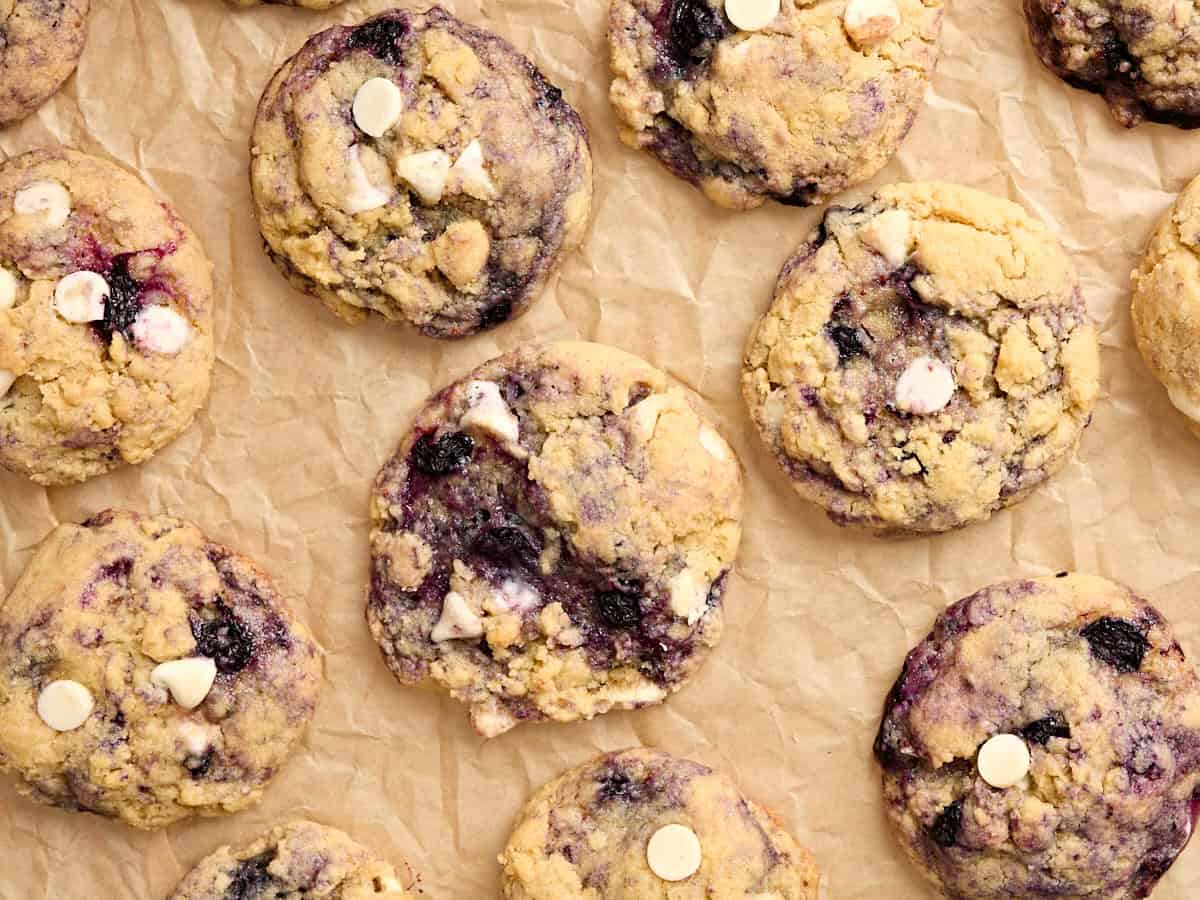
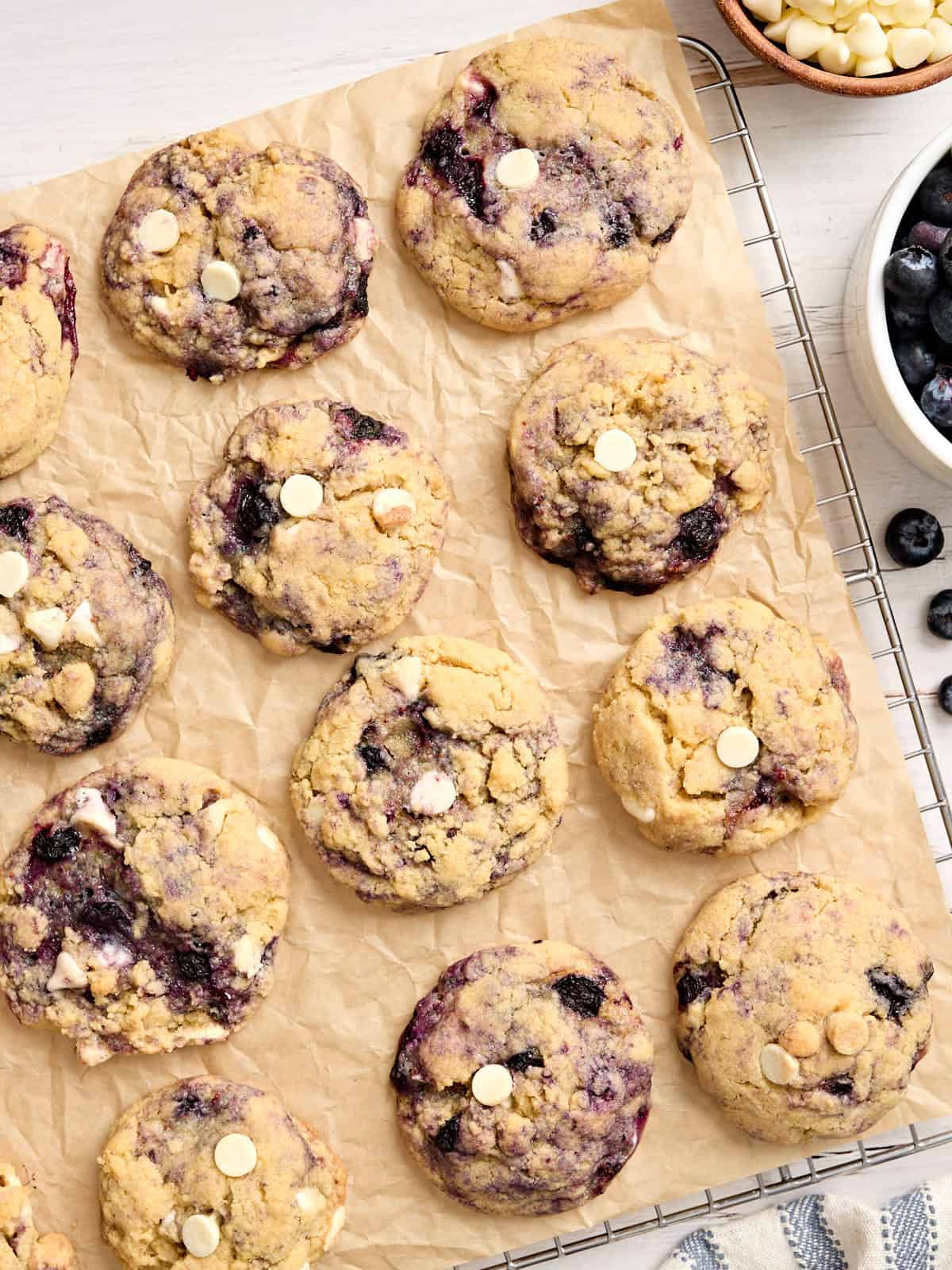
These Blueberry Cookies are one of my favorite summery treats, and because they start with frozen blueberries, I can enjoy them any time of year. They’re still one of the best ways to celebrate farmers market season and warm summer nights. This easy no-chill cookie recipe makes 3 dozen chewy, jammy cookies with brown sugar, white chocolate chips, and just the right amount of cinnamon for a cozy-sweet blueberry flavor.
All recipes are rigorously tested in our Nashville Test Kitchen to ensure they are easy, affordable, and delicious.
Soft and Chewy Blueberry Cookies
These blueberry cookies have the soft, chewy center you want in a homemade cookie, with little pockets of juicy blueberry, creamy white chocolate chips, and a hint of cinnamon that makes the berries taste even sweeter and fuller.
The best texture comes from adding the blueberries to the dough fully frozen, even when starting with fresh berries from the farmers’ market or grocery store. The colder, firmer berries are much easier to fold in without smashing, so the dough doesn’t turn too wet or streaky before it hits the oven. The cookies still bake into jammy little pockets, but they hold their shape better and stay chewy instead of spreading too much. If you’re in a fruity cookie mood, these strawberry cookies are another fun one to try next.
Tips for the Best Blueberry Cookies
-
Keep the blueberries fully frozen. Add them to the dough straight from the freezer. If you’re starting with fresh berries, fully freeze them first. Soft or thawed blueberries can burst as you fold them in, making the dough too wet and turning it blue or purple before baking.
-
Fold gently once the berries go in. Use a spatula instead of a hand mixer so the blueberries and white chocolate chips stay mostly intact. A few blueberry streaks are totally fine, but crushed berries throughout the dough can make the cookies bake up wetter than you want.
-
Don’t overmix after adding the flour. Mix just until the dry ingredients disappear and a sticky dough forms. Overmixing develops the gluten in the flour, which can make the cookies tougher instead of soft and chewy.
-
Watch the edges, not just the timer. These cookies are done when they’ve spread and the tops or edges are just starting to turn lightly golden. Pull them on the earlier side because the centers keep setting as they cool, giving you a softer, chewier cookie.
-
Bake the dough right away. As with peaches and cream cookies, making this dough ahead once the fruit is folded in is not recommended. Even though the berries start frozen, they’ll thaw as the dough sits and release extra juice, making the dough too wet and affecting how the cookies spread and bake.
-
Make them bakery-style! For bigger, coffee shop-style cookies, stack two scoops of dough on top of each other, gently press them together, and leave extra room between each cookie on the baking sheet. This makes fewer cookies, but they still cost far less than buying giant cookies from a bakery or coffee shop — and they make a great homemade gift.
Why Creaming Butter and Sugar Matters
If you’ve ever wondered why cookie recipes don’t tell you to add everything to the bowl at once, here’s what’s happening when you cream butter and sugar together:
-
Creaming creates tiny air pockets. As the sugar is beaten into the softened butter, it creates tiny air pockets throughout the dough. When the cookies hit the oven, the baking powder releases carbon dioxide, which expands into those pockets, helping the cookies bake up softer, thicker, and less dense.
-
Sugar starts dissolving into the butter. Creaming allows the sugar to dissolve into the butter rather than remaining gritty in the dough. That helps the cookies bake more evenly, with soft centers and edges that don’t spread too quickly.
-
It gives the egg a smoother base to blend into. Butter is mostly fat, and eggs add liquid, so they need a little help to emulsify into one smooth mixture. When the butter and sugar are creamed first, the egg and vanilla mix in more cleanly, making the dough smooth instead of separated.
-
The flour can be mixed gently. Once the flour is added, overmixing can make cookies tough. Getting the butter, sugar, egg, and vanilla properly combined first means you can mix the flour in just until the dough comes together.
Recipe
Cost: $4.54 per recipe / $0.13 per serving
Ingredients
- 10 Tbsp salted butter, softened (1 stick + 2 Tbsp)
- 1 cup light brown sugar, packed
- ½ cup granulated sugar
- 2 cups all-purpose flour
- 1 tsp sea salt
- 1 tsp baking powder
- 1 large egg
- 1 tsp vanilla extract
- ½ tsp cinnamon
- 1 cup frozen blueberries
- ½ cup white chocolate chips
Instructions
- Preheat the oven to 375°F. Line two baking sheets with parchment paper.
- In a large bowl, beat the softened butter with both sugars until light and fluffy, about 2–3 minutes.
- Add the egg and vanilla extract and mix until smooth and well combined.
- In a separate bowl, whisk together the flour, salt, baking powder, and cinnamon. Add the dry ingredients to the butter mixture and mix just until a sticky dough forms — do not overmix.
- Using a spatula, gently fold in the frozen blueberries and white chocolate chips until evenly distributed.
- Scoop the dough by the tablespoon onto the prepared baking sheets, spacing them about 2 inches apart.
- Bake for 10–12 minutes, until the edges are just starting to turn lightly golden. The centers will look slightly underdone — that’s perfect.
- Allow the cookies to cool on the baking sheet for 5 minutes before transferring to a wire rack. They will continue to set as they cool, resulting in a soft, chewy texture throughout.
These blueberry cookies are best enjoyed the day they’re baked but will keep in an airtight container at room temperature for up to 3 days.