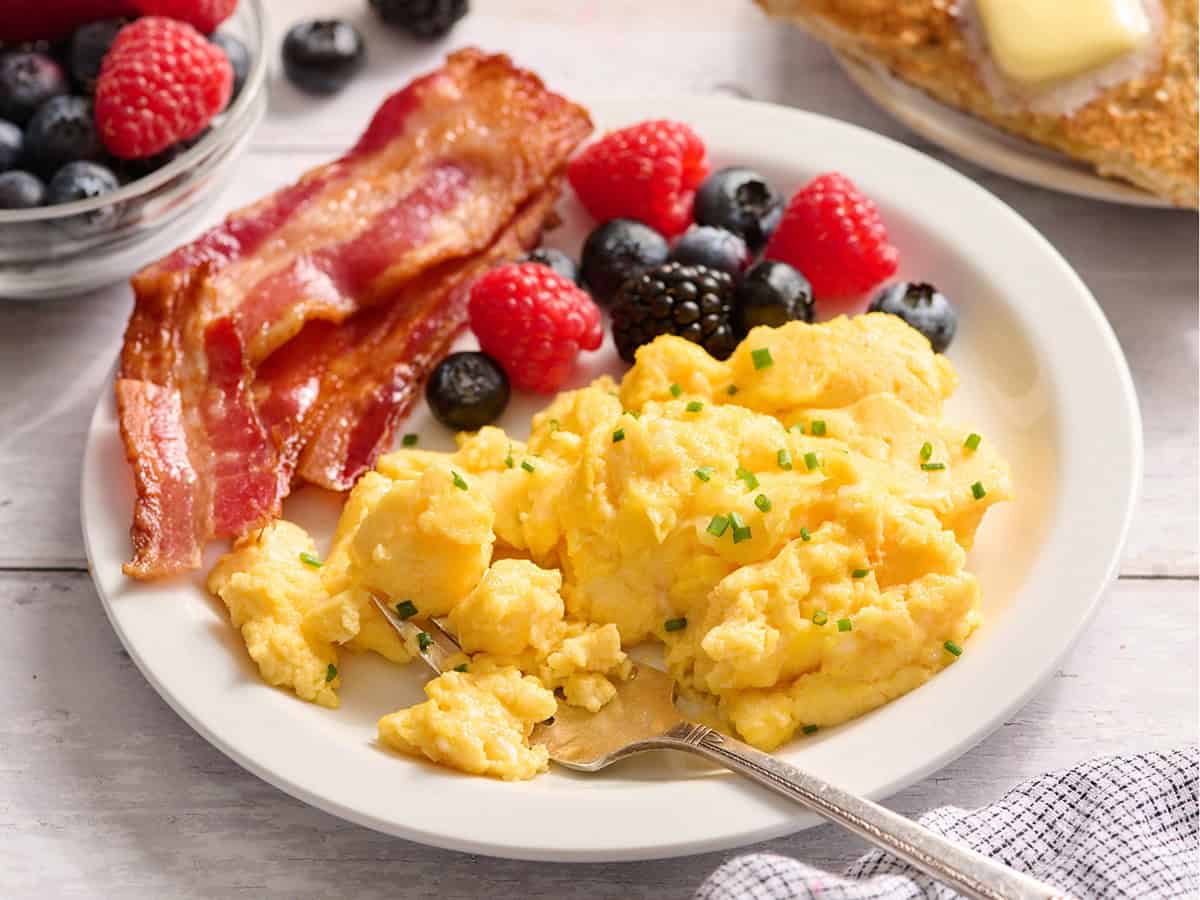
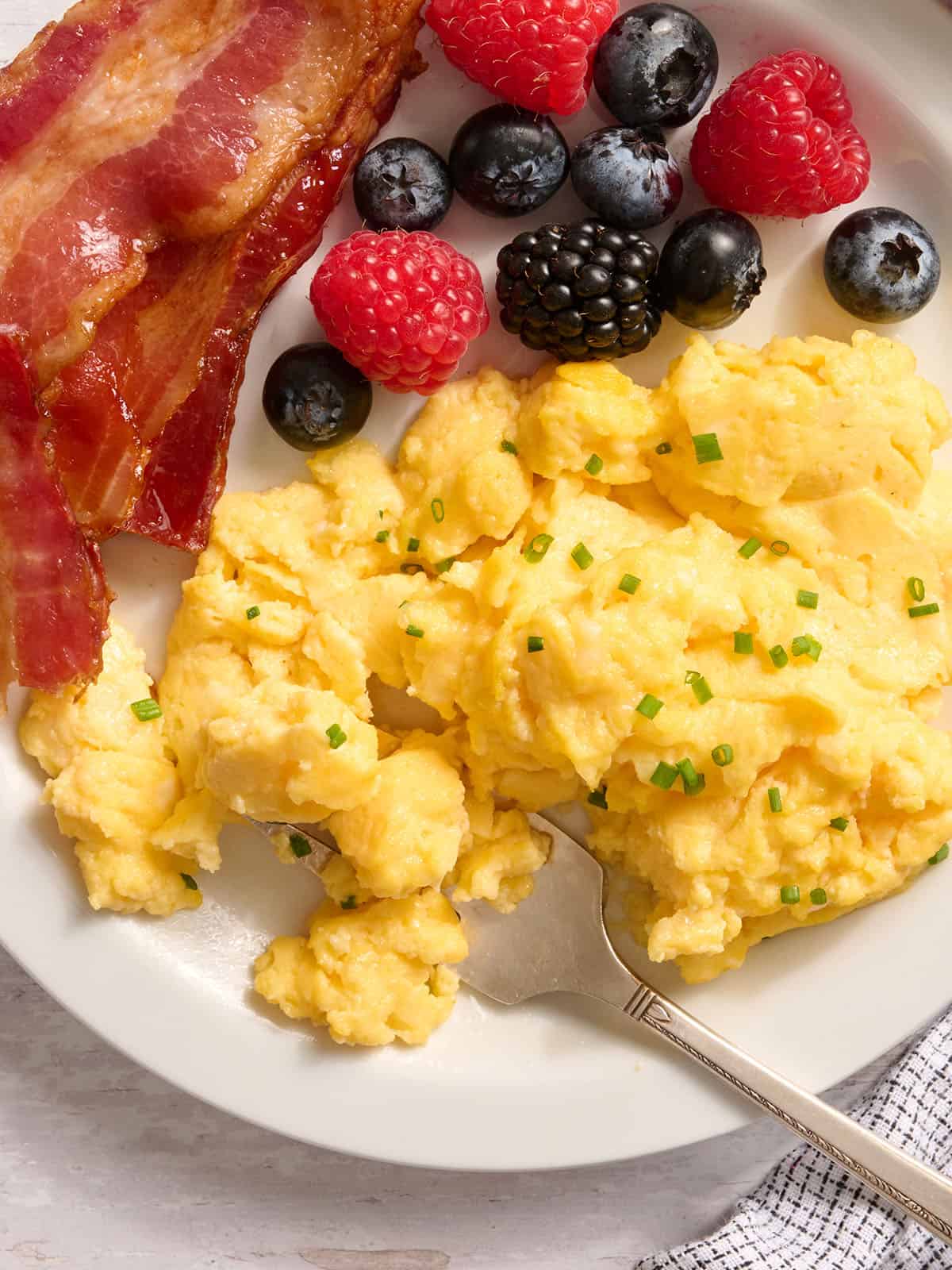
These Cottage Cheese Eggs turn three everyday eggs into an extra-creamy breakfast using just four simple ingredients. A little cottage cheese works some serious breakfast magic here, giving every bite a soft texture and mild flavor. These cottage cheese eggs are ready in about 15 minutes, pack roughly 11 grams of protein per serving, and might just be the most delicious upgraded scrambled eggs you’ve ever had.
All recipes are rigorously tested in our Nashville Test Kitchen to ensure they are easy, affordable, and delicious.
Creamy Cottage Cheese Scrambled Eggs
I have chickens at home, so every time we crack an egg into a frying pan, I do a little happy dance. Raising chickens takes a lot of work, so it’s never lost on me what an incredible, nutrient-dense source of protein each little egg provides. Now, I know most of us don’t keep chickens at home (and I can tell you — it’s almost certainly more budget-friendly not to). And I’m sure we all remember when egg prices skyrocketed and threw our grocery budgets into a total tailspin, but the great news is that egg prices have leveled out, making them once again a wonderfully affordable, high-quality protein staple. Pair that budget-friendly win with this recipe for cottage cheese eggs, and you truly can’t lose!
The addition of protein-packed cottage cheese is all it takes to make your classic scrambled eggs extra creamy and delicious. It’s protein added to protein — which also means it’ll keep you full and doesn’t cost a ton, either. I add just a couple spoonfuls, which is enough to make the eggs soft and tender without adding too much moisture to the pan. I also like to gently mix in the cottage cheese so a few soft curds remain for a super creamy bite. Even if you’re not planning to hit the gym, this easy breakfast is going to make you very happy!
-
Whisk the eggs really well! Beat the eggs and salt until the mixture is an even sunny yellow and looks slightly airy. This helps the eggs cook into softer, more uniform curds instead of leaving behind firm streaks of egg white.
-
Adjust the heat to your stovetop. During testing, I found that my pan needed to be on the medium heat setting at our test kitchen, but medium-low was sufficient on my stovetop at home. If you feel like your cottage cheese scrambled eggs are taking too long to cook and the texture is getting a little broken, kick the heat up a little and stop moving them around in the pan for a minute. Flip or stir once you see the eggs are cooking into more solid curds.
-
Stir gently, then let the eggs cook. Use slow, sweeping motions to move the cooked egg aside and bring the liquid egg into contact with the pan. Try not to stir constantly, since the eggs need a few short pauses against the hot surface to form proper curds and allow excess moisture to cook away.
-
Don’t mistake the cottage cheese for uncooked egg white! Because the cottage cheese is added after the eggs are fully whisked, a few small curds will be visible in the finished eggs. That texture is completely intentional and adds a creamy mouthfeel. If you prefer a totally smooth result, you can blend the egg mixture before cooking, but it will likely have a different texture than the version described here.
Cost: $0.58 per recipe / $0.29 per serving
Ingredients
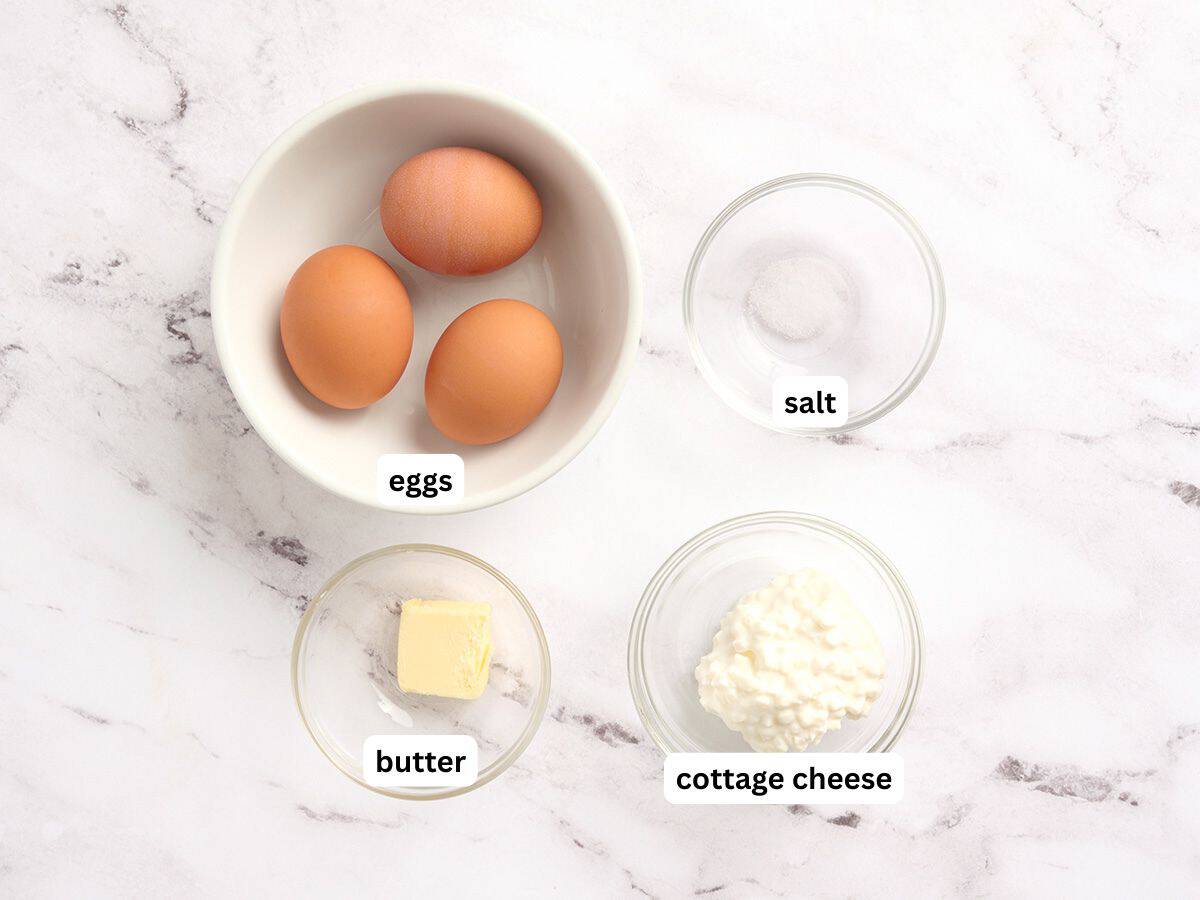
- 3 large eggs ($0.30)
- ⅛ tsp salt ($0.01)
- 2 Tbsp cottage cheese ($0.15)
- 1 Tbsp butter ($0.12)
Instructions
- Gather your ingredients.
- Whisk the eggs well — and then whisk them some more. With a fork or a whisk, beat the eggs and salt together until the entire mixture is a consistent sunny yellow color, with no defined streaks of egg white visible.
- Add the cottage cheese.
- Gently whisk the cottage cheese into the eggs, being careful to leave some of their natural texture intact. Leaving some of the curds adds a pleasant mouthfeel.
- Add butter to a skillet over medium-low heat. Once melted and a little foamy, add the cottage cheese egg mixture.
- Be patient and let the eggs come up to temperature. Begin to stir them in the pan once you see the color shift from yellow to a more creamy, bright yellow. Gently stir to move the uncooked liquid egg to expose it to the pan. Don’t stir constantly, or you’ll end up with a sloppy mess — but don’t walk away, as this doesn’t take long.
- Once the eggs are cooked, set but not tough or browning, remove them from the heat and enjoy.
Notes
You can use full-fat or low-fat cottage cheese, and either small or large curds will work. 4% cottage cheese is recommended. If yours has a lot of liquid sitting on top, give it a quick stir or spoon off the excess before measuring.
The eggs will continue cooking after you remove the pan from the heat. For softer, looser curds, take them off while they’re set but still slightly glossy.
See how we calculate recipe costs here.
Nutrition (per serving)
| Nutrient | Amount |
|---|---|
| Calories | 172 kcal |
| Carbohydrates | 1 g |
| Protein | 11 g |
| Fat | 13 g |
| Sodium | 344 mg |
Nutrition data is automatically calculated using all ingredients listed on the recipe card. Percentages are of daily value.
How to Make Cottage Cheese Eggs: Step-by-Step Photos
With just four ingredients and about 15 minutes, cottage cheese eggs are a simple upgrade worth making part of your regular breakfast rotation.