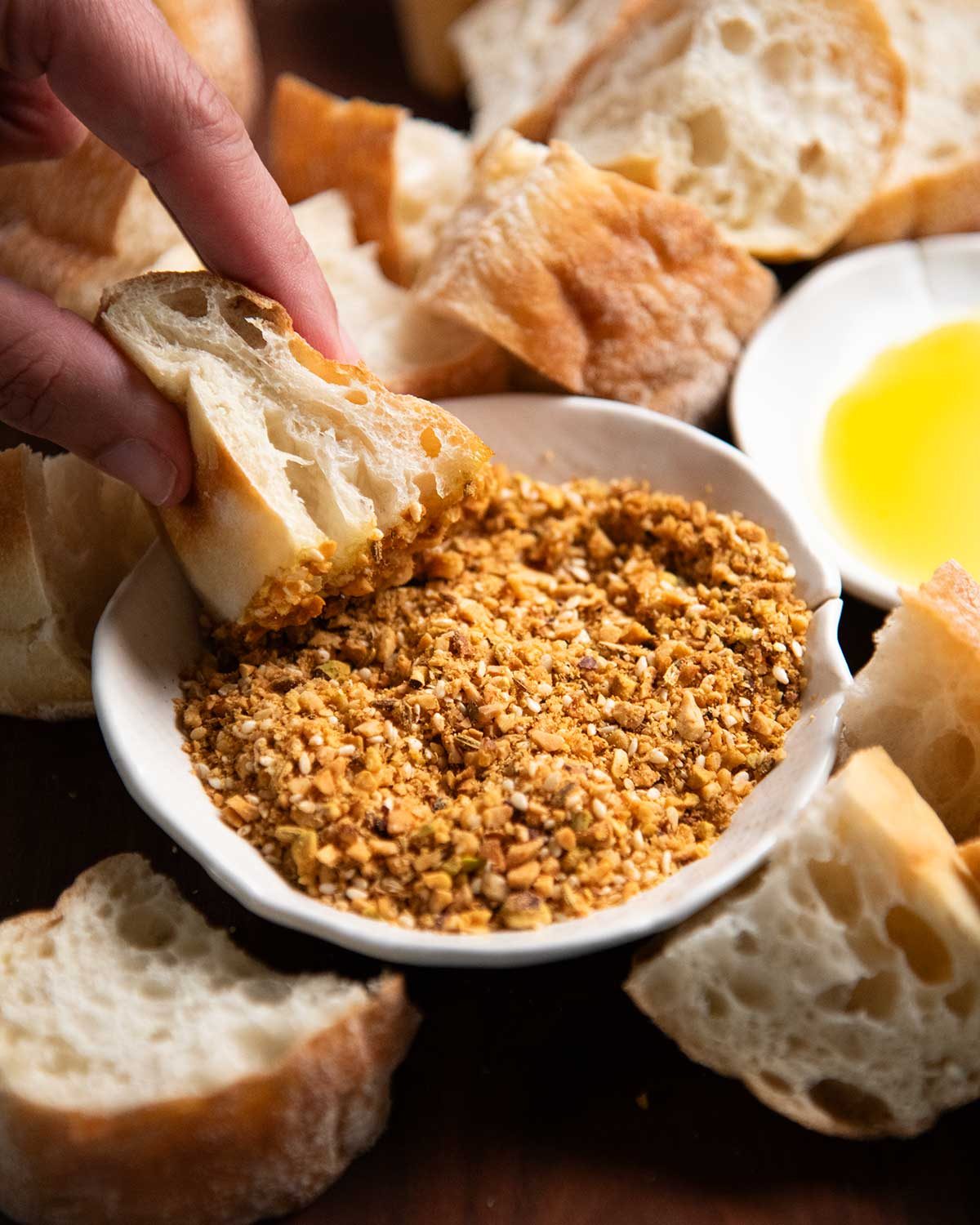
This is JB’s Dukkah, and it may well be the most useful recipe you find this year, especially with the upcoming holiday season! Add bread + olive oil = instant app. Sprinkle on any meats or veg to instantly elevate. GIFT IT! Costs a pittance to make – and it’s “gourmet”!
JB’s Dukkah recipe
Dukkah is an Egyptian nut, seed and spice blend that is popular throughout the Middle East and now enjoyed all around the world, often carried in gourmet shops with price tags to match!
JB’s been making it for as long as I’ve known him, and we always seem to have a little jar stashed away somewhere. It’s one of those universally handy things like chilli crisp and sriracha, that once you start using, you’ll never look back. A topping and finish that adds crunch, flavour and a little Middle Eastern flair to everything from roasted vegetables to meat, fish and even eggs.
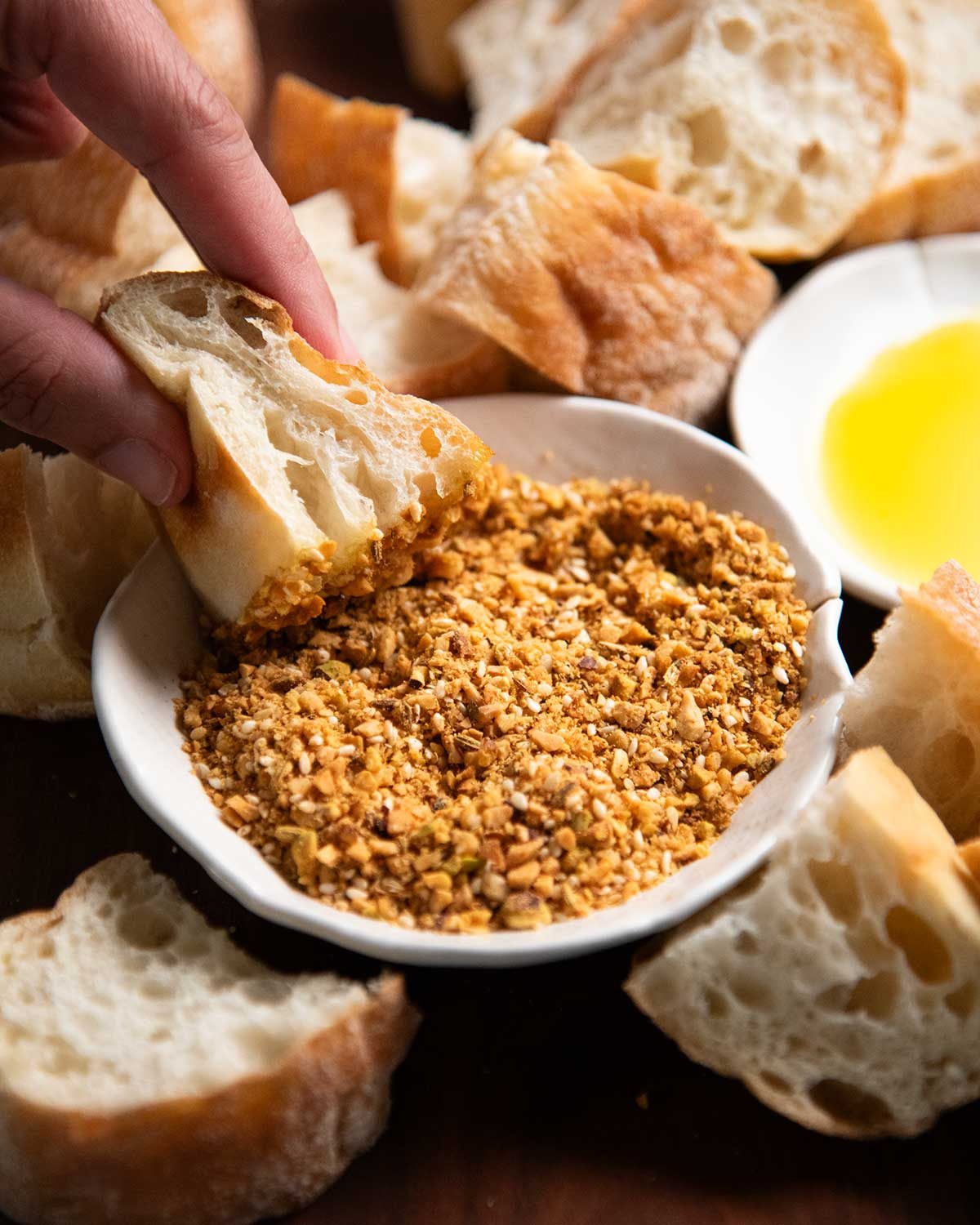
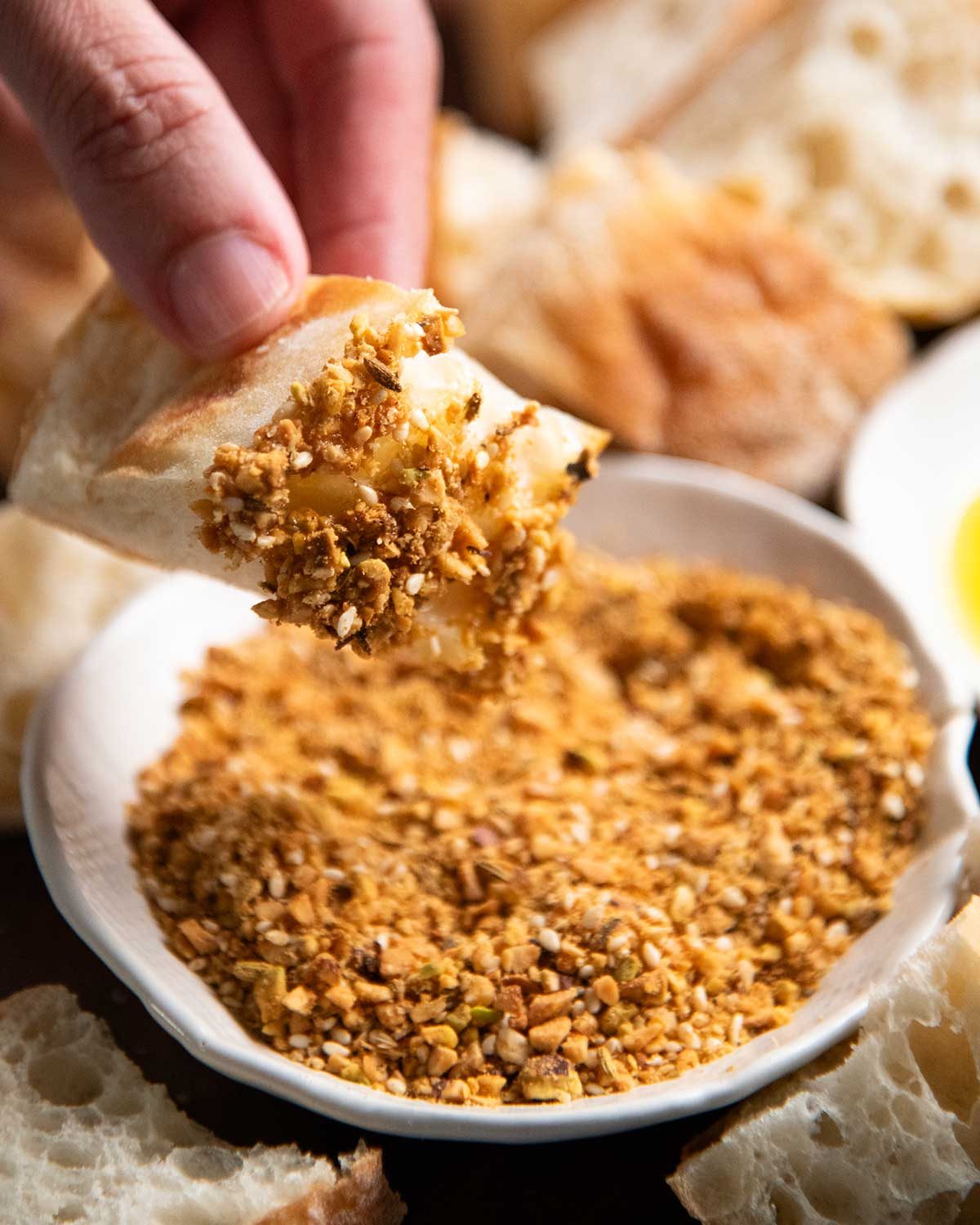
But my absolute favourite way to eat it is the traditional way – with bread and olive oil for dipping. Just put out a bowl of dukkah with bread pieces and olive oil, then dip a piece of bread in olive oil then the dukkah (it totally sticks), then pop it straight in your mouth. That’s right, there’s no need to go to all that effort to make a dip, just pour dukkah into a bowl and watch everyone dive in. How good is that!!
Ingredients in Dukkah
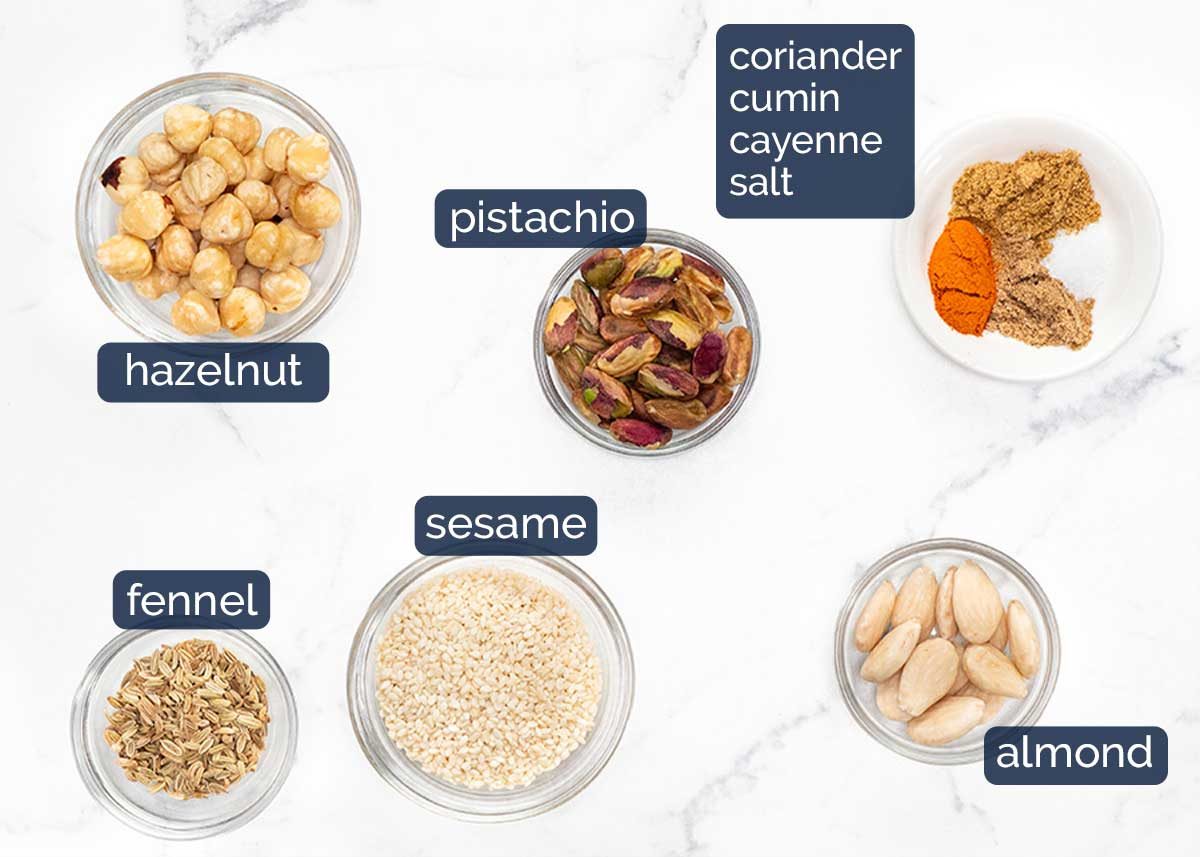
Here’s what goes in dukkah. It is JB’s recipe, one he picked up during his years working in restaurant kitchens, using the classic combination of ingredients typically found in Egyptian dukkah.
-
Hazelnuts – Traditionally the most common nut in dukkah. Use skinless roasted hazelnuts (skinless hazelnuts are roasted). If you only have skin-on ones, it’s best to remove the skin as it is quite bitter – I’ve popped directions in the recipe card for how to do this (roast then rub with a tea towel).
Best substitute – I think blanched almonds are the best substitute, but then replace the blanched almonds in this recipe with another nut, either walnuts or more pistachios (so you end up with a combination of 3 nuts). Cashews would also be lovely!
-
Blanched almonds and pistachios – These are the other two nuts that JB uses, both of which are commonly used in traditional dukkah. I like how pistachios add little specks of green in the dukkah! But feel free to swap them for walnuts, which is also a popular choice, or use only one of them. (Note: blanched almonds are skinless. For the small amount we use, I wouldn’t go out of my way just to get them – you can use regular skin-on almonds.)
-
Sesame seeds – Another key ingredient that adds toasty sesame flavour into the mix.
-
Fennel seeds – Another spice commonly used in traditional Egyptian dukkah. They add a subtle sweetness and warm, slightly aniseed flavour that gives dukkah that “gourmet” edge!
-
Spices – Coriander and cumin are the classic spices that give dukkah its distinctive warm, earthy flavour, while cayenne adds just a little background heat. Not enough to make it spicy, just enough to give it a little warm hum! Feel free to reduce or omit the cayenne pepper.
How to make Dukkah
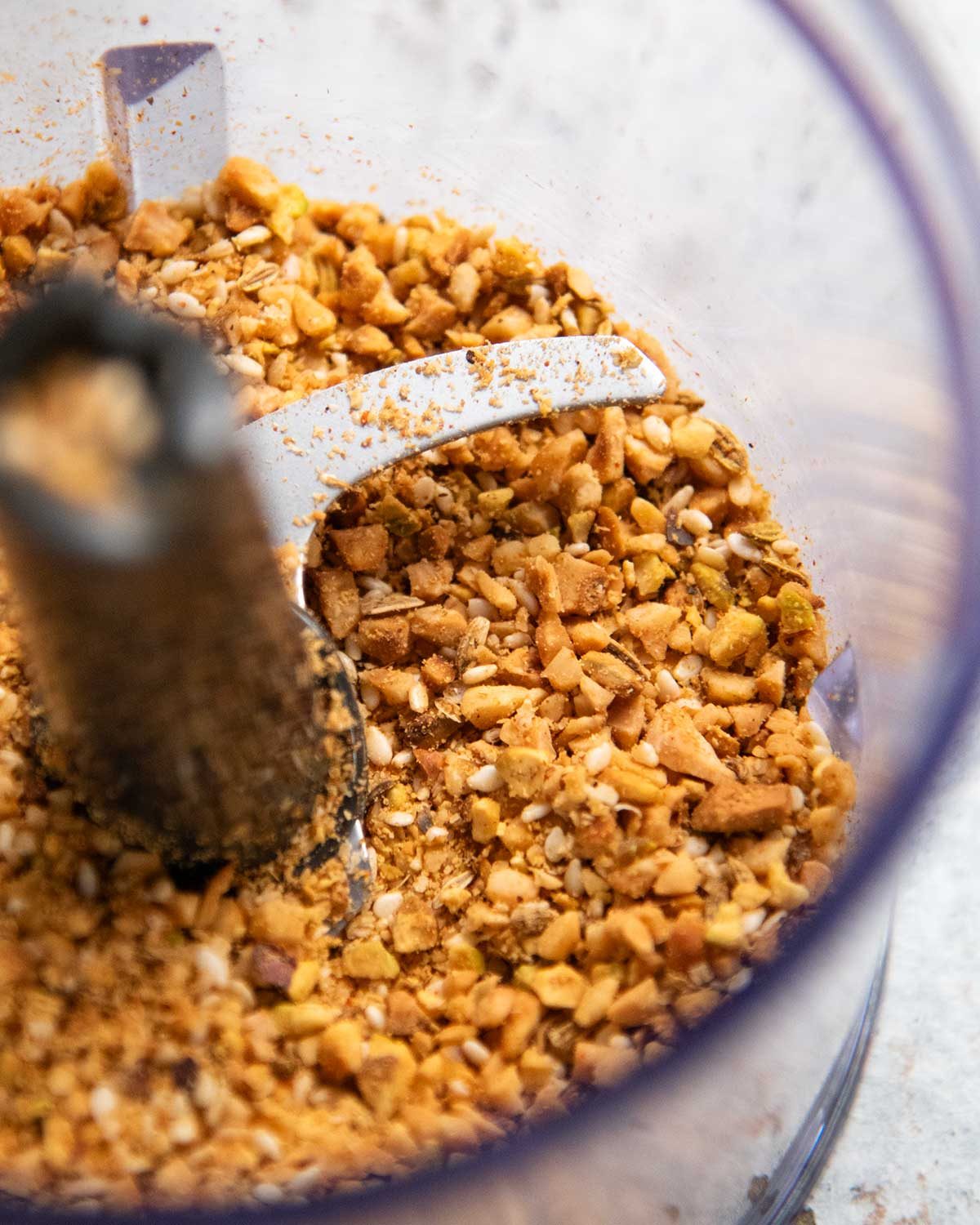
The defining characteristics of traditional Egyptian dukkah are its coarse, crumbly texture and toasty, nutty flavour. So make sure you don’t grind it into a fine powder or paste, and don’t skip the nut roasting!
-
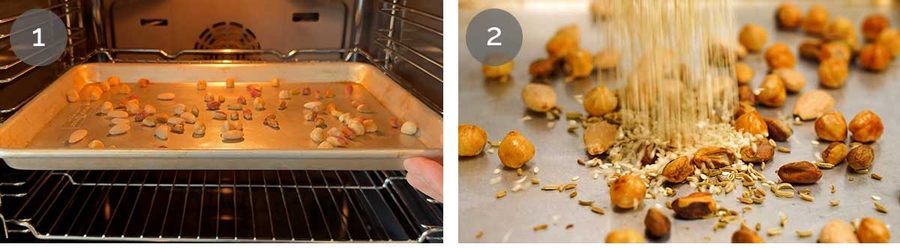
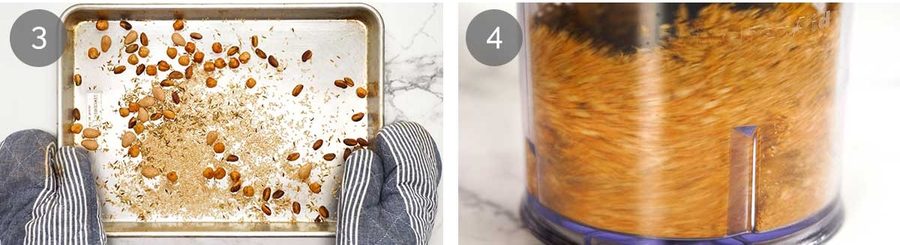
Roast nuts first – Spread the nuts on a tray and bake for 5 minutes at 180°C/350°F (160°C fan-forced). By “nuts”, I mean the hazelnuts, almonds and pistachios.
-
Add the seeds – Then add the sesame seeds and fennel seeds to the tray and shake to spread everything out. Then bake for 3 minutes.
-
Fully cool on the tray for 15 minutes.
-
Coarsely blitz – Pour the nuts and spices into a mini food processor. Then blitz until the nuts are coarsely ground. Don’t let it all turn into powder! You want a coarse, crumbly mixture with little bits of nuts for texture and crunch.
I use a mini food processor because there’s not enough to effectively blitz in a regular large one. But if you triple the recipe (or more!), feel free to use a large one!
Alternative to food processor – Use a mortar and pestle, or put everything in a ziplock bag and pound with the flat side of a meat mallet or rolling pin. I find my spice grinder, Nutribullet and blender don’t work well for dukkah to evenly blitz so you get coarser small bits. You either end up with everything as a super fine powder or have some giant chunks.
And that’s it! Your dukkah is ready to use!
How to use dukkah
The traditional way to use dukkah is as a bread dip for a starter. Just pour the dukkah into a small bowl and some good extra virgin olive oil in another (my favourite shop-bought is Lomondo from Mudgee in NSW, carried at Harris Farm). Pile warm cubes of bread, focaccia or wedges of pita bread on the side. Dip bread into olive oil first then the dukkah (it will stick to the oil). Eat!
But it’s also incredibly useful as a topper, sprinkling and crumbing, a simple way to add extra flavour and interest to vegetables, meats, eggs and breads. Here are some ideas!
- Dukkah bread – Brush bread with olive oil then sprinkle with dukkah and sea salt flakes, then bake. Ideal to use bread with a large surface area (e.g. pita bread, Lebanese bread, focaccia).
However you use it, a jar of homemade dukkah is an easy way to bring crunch, flavour and a little Middle Eastern flair to almost anything you serve.