The Case for Lentils on a Weeknight
There’s a particular kind of weeknight pressure that hits around 6 p.m. - the moment when takeout starts sounding reasonable and the pantry feels like a puzzle with missing pieces. Lentil meatballs don’t fix every version of that problem, but they fix a specific and common one: wanting something substantial, savory, and Italian-ish without paying for ground beef or shelling out for expensive packaged meat substitutes. The entire recipe comes in at just over $5.
Brown lentils are doing the structural work here. They hold their shape through cooking and processing in a way that red or yellow lentils don’t, which matters when you need something that stays round rather than dissolving into sauce. The goal is tender but firm - cooked through, but with enough structure left that the food processor doesn’t reduce them to paste.
This is also a recipe where the supporting cast - mushrooms, walnuts, sun-dried tomatoes, caramelized onions - isn’t decorating around lentils. It’s borrowed directly from a lentil loaf formula, rebuilt into something bite-sized that works on a Tuesday.
Why Moisture Is the Main Technical Problem
Vegan meatballs collapse for one reason more than any other: too much liquid in the mixture before it gets formed. Mushrooms are the primary culprit. As they cook, they release a significant amount of water. The move is to keep cooking them past that wet stage, past the steaming, until the liquid evaporates and the mushrooms start to actually brown. That browning builds the savory, meaty flavor that makes these worth making in the first place.
Caramelized onions follow the same logic - slow heat, patience, and a pan that isn’t overcrowded. The sweetness they develop at that stage balances the earthiness of the lentils and the sharpness of the sun-dried tomatoes. Skipping this step or rushing it produces a mixture that tastes flat and doesn’t bind properly.
The flax egg - one tablespoon of ground flax mixed with water, rested for a few minutes until it gels - replaces the egg that would normally hold a traditional meatball together. It needs time to thicken before going into the food processor. A watery flax mixture added too soon undermines the breadcrumbs and leaves you with meatballs that won’t hold a fork.
Building the Mixture Without a Food Processor Disaster
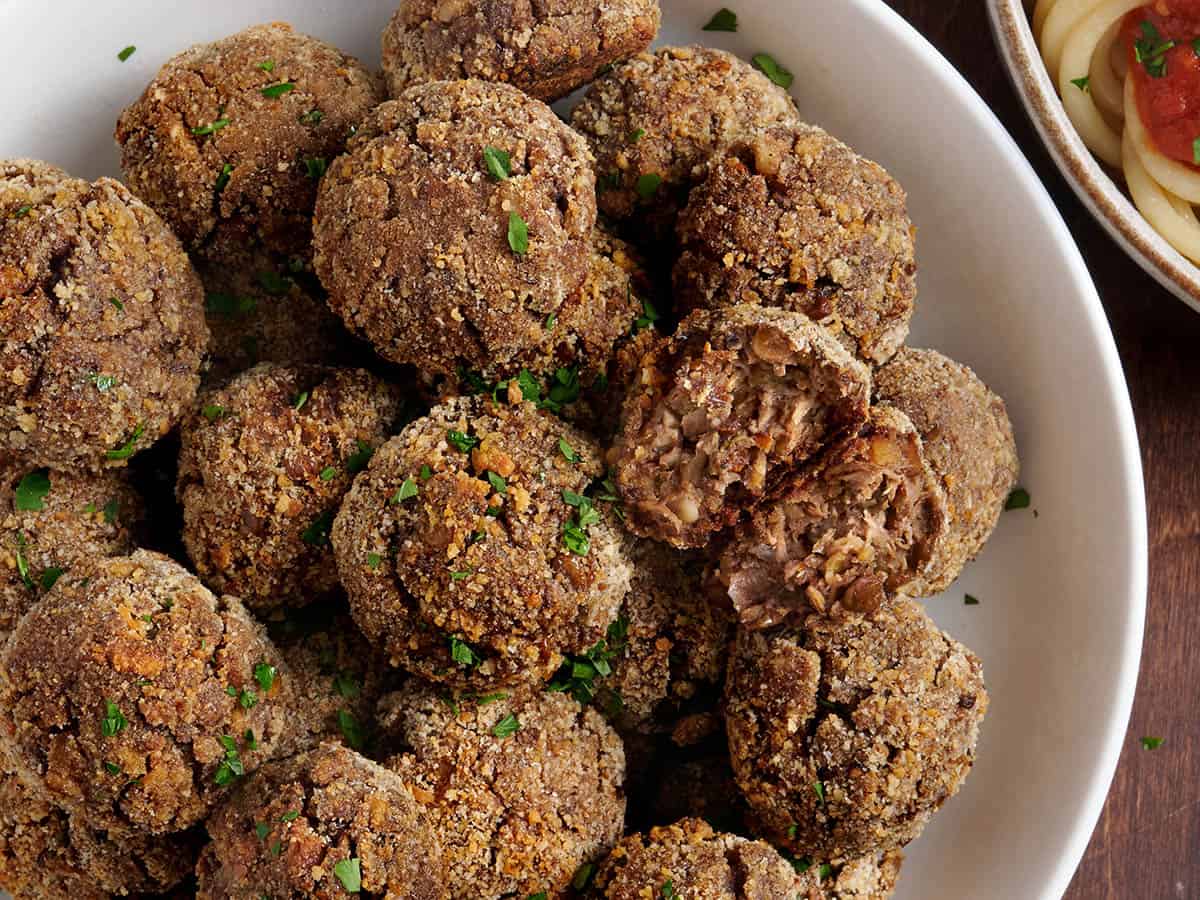
Once the mushrooms are browned and the onions are caramelized, the food processor step is where the recipe can go wrong in a new way. The instruction here is to pulse, not run. The distinction matters: running the processor turns everything into a smooth paste, while pulsing - short bursts, checking after each one - keeps some lentil pieces visible and gives the final meatball a texture that reads as hearty rather than processed.
The target is a mixture that’s thick and sticky, not smooth.
A quick breadcrumb coating goes on after rolling, just before the meatballs go into the oven. That exterior layer toasts during baking and acts as a light crust that helps each ball hold its shape when it hits sauce. Baking is non-negotiable in this recipe - the oven time is what sets the outside. A long simmer in marinara afterward will soften that crust and make the meatballs fragile, so the sauce goes on after, not during.
Getting Lentils Right Before Anything Else
Cook Time and Texture
Brown or green lentils work here; red and yellow don’t. The target texture is described as “slightly firm” - tender enough to eat but not so soft that they mash when pressed. Overcooked lentils absorb the rest of the moisture in the mixture and make it too wet to roll cleanly.
Lentils don’t need soaking, which is one of the things that makes them practical for a weeknight recipe. They go from dry to cooked in roughly 20 to 25 minutes on the stovetop. Rinse them, check for stones, cover with water by about two inches, bring to a boil, then reduce to a simmer. Start checking texture at the 18-minute mark.
What “Slightly Firm” Actually Means
Press a lentil between two fingers. If it mashes completely without resistance, they’ve gone too far. If there’s a bit of give but it still holds its shape under light pressure, that’s the right stage to pull them off the heat. Drain them immediately and spread them out if you have a few minutes, so steam doesn’t keep cooking them in the colander.
Fennel Seed and the Italian Connection
One ingredient that doesn’t announce itself loudly but changes the whole profile of these meatballs is fennel seed. A small amount - a pinch to a quarter teaspoon depending on preference - brings the specific aromatic quality that most people associate with Italian sausage and, by extension, with a classic plate of spaghetti and meatballs.
It’s not the same as anise, and it’s not overwhelming. At the right amount, it reads as background flavor - the thing you’d notice if it were missing rather than the thing that defines the dish. Combined with the umami from mushrooms and sun-dried tomatoes, and the protein structure from lentils and walnuts, it makes these meatballs taste less like an approximation of something else and more like their own category of thing.
Serving and Storage on a Tight Schedule
The straightforward application is spaghetti with a jarred or homemade pasta sauce - pile the meatballs on after the sauce is already on the pasta, rather than simmering them together. They absorb sauce without falling apart when handled that way.
They also work in a sub roll with sauce and melted vegan cheese, or simply on their own as a protein-forward element in a grain bowl situation. At just over $5 for the full batch, the math works across multiple meals if you’re cooking for one or two people.
Leftovers hold well in the refrigerator for several days. Reheat in a dry pan over medium heat rather than the microwave if you want the exterior to stay intact - the microwave softens the breadcrumb crust quickly and makes them harder to handle. If reheating directly in sauce, do it briefly and over low heat.
The Real Advantage Over Store-Bought Alternatives
Packaged vegan meat products have improved significantly in texture and flavor over the past decade, but they come at a price that doesn’t make sense for an everyday weeknight dinner. A single package of plant-based ground “meat” often runs $6 to $9 for roughly one pound - more than the cost of this entire lentil meatball recipe, which yields enough for a full pasta dinner for four.
Brown lentils cost roughly $1.50 to $2 per pound dry at most grocery stores, and a cup of dry lentils - about half a pound - is enough for a full batch here.
The texture isn’t identical to beef meatballs, and there’s no reason to pretend otherwise. What it is: dense, savory, satisfying in the way that a meal with real protein content feels satisfying. The walnuts contribute fat and a slight richness that keeps the meatballs from tasting lean or sparse. At $5.