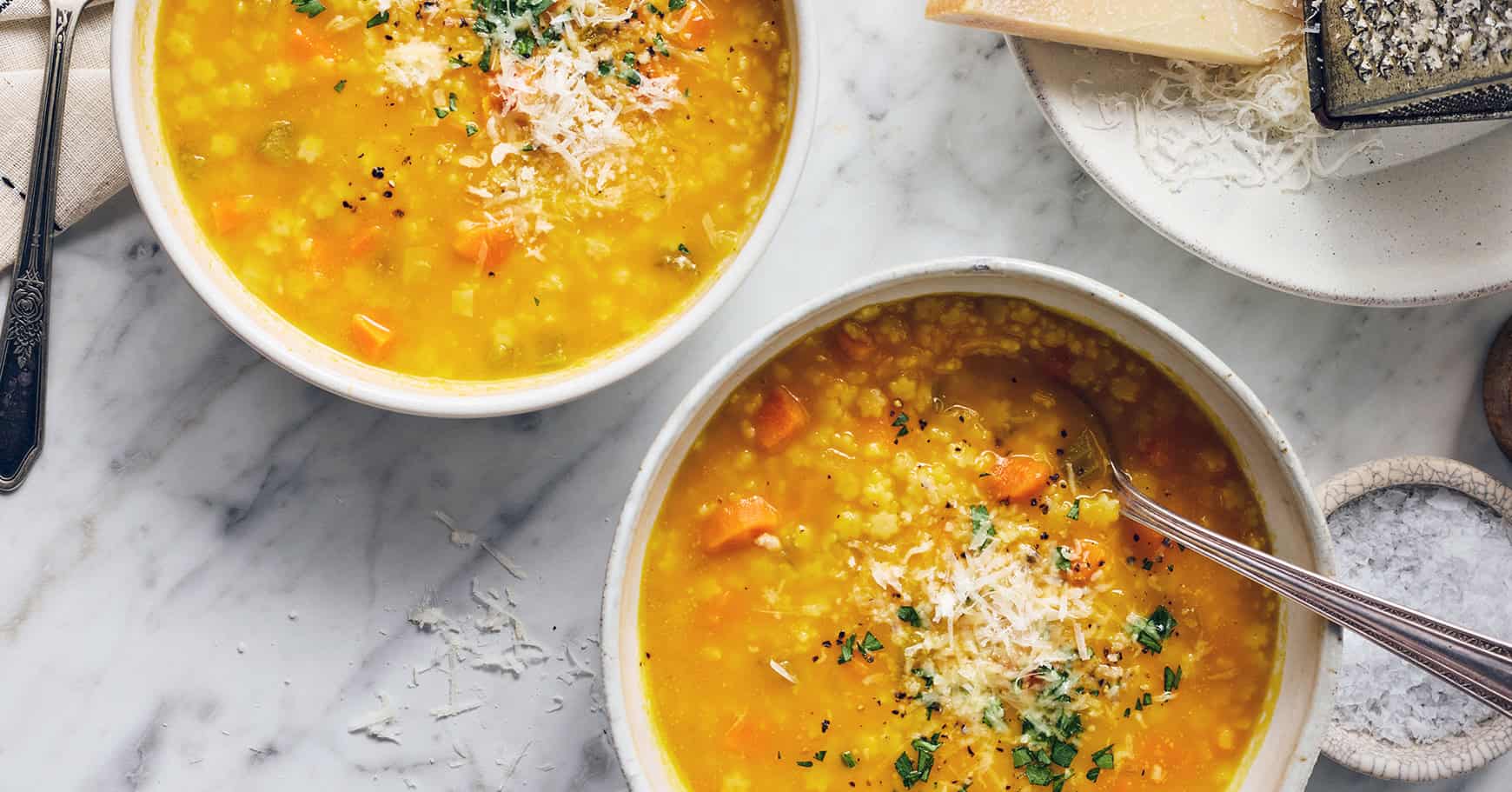
This pastina soup recipe is filled with tiny pasta and tender vegetables that get blended into the flavorful broth. Inspired by Italian penicillin soup, it’s soothing, nourishing, and delicious.
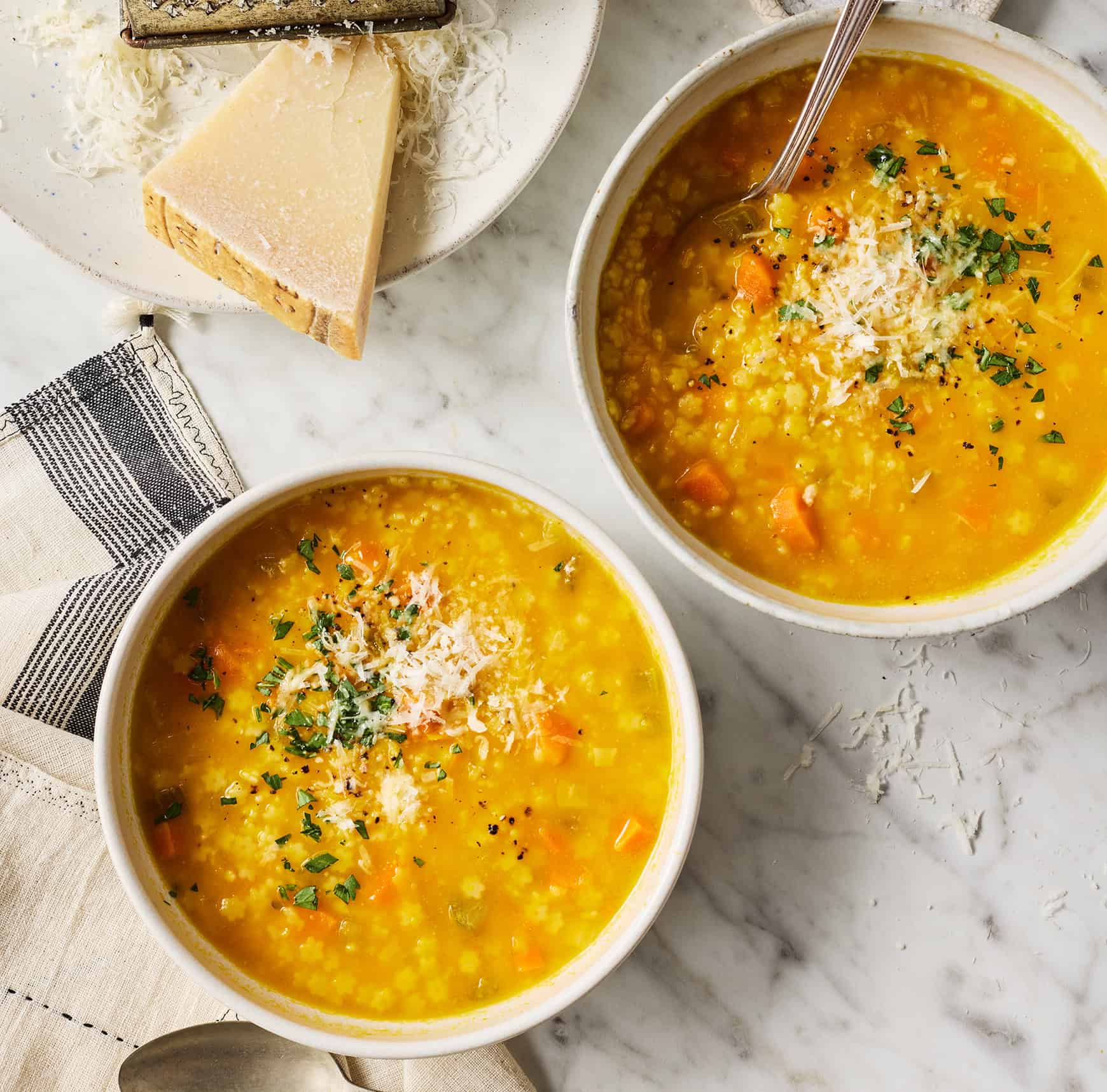
This pastina soup recipe is the best kind of comfort food. Filled with tiny pasta (pastina, in Italian) and tender vegetables, it’s cozy and flavorful, but nourishing too. Some of the vegetables stay whole for texture, while the rest get blended into the broth, thickening it slightly and giving it a stunning golden color. On a chilly fall or winter day, it’s a delicious way to warm up.
Pastina soup is sometimes called Italian penicillin. You can think of it like chicken noodle soup’s Italian cousin, a perfect soothing meal for days when you’re under the weather. Most versions call for chicken or at least chicken broth, but this recipe is a vegetarian take to have in your back pocket during cold season.
After three rounds of testing to get the ratio of noodles to veggies and broth just right, this pastina soup hits the mark. It’s simple to make, bright with lemon, and filled with aromatic flavor from bay leaves, parsley, and thyme.
What is pastina?
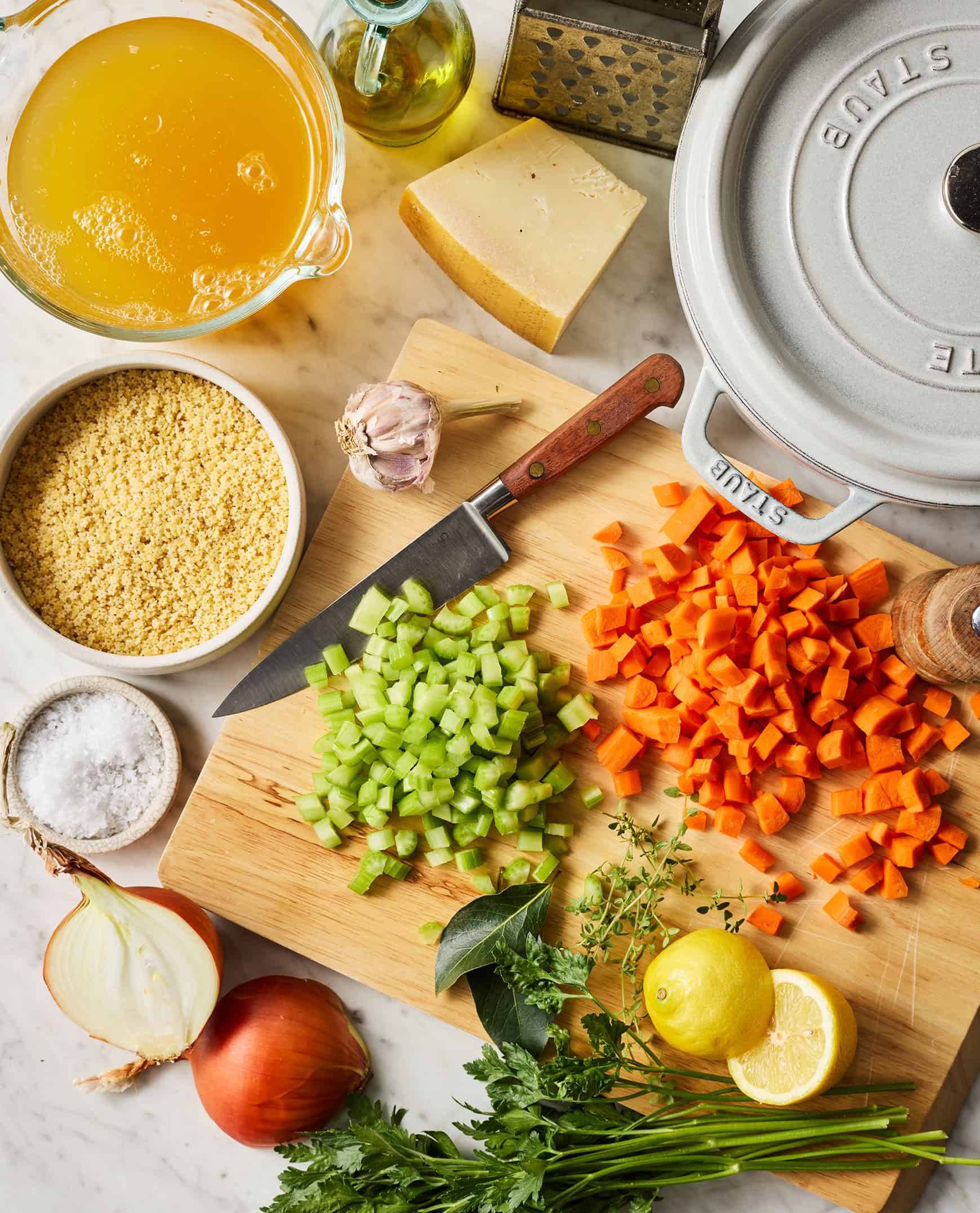
Pastina means “little pasta” in Italian. It doesn’t refer to one specific pasta shape, but rather any very small pasta (less than 1/4 inch in size is a good rule of thumb). Some common types of pastina are stelline (tiny star-shaped pasta), acini di pepe (little pearls), and ditalini (small tubes). Any of these shapes will work nicely in this soup!
Pastina Soup Ingredients
Here’s what you’ll need to make this pastina soup recipe:
- Pastina, of course! Acini di pepe and stelline are favorites in this recipe, but any tiny pasta shape will work.
- Onions, garlic, carrots, and celery – These savory vegetables create the soup’s flavorful base.
- Fresh thyme, parsley stems, and bay leaves – Simmered in the soup to add fresh, aromatic flavor to the broth. If you don’t have fresh thyme on hand, dried thyme will work in its place. Use 1 teaspoon instead of the bundled thyme sprigs.
- Extra-virgin olive oil – It adds richness and helps the vegetables soften at the start of the cooking process.
- A Parmesan rind – Just like the bay leaves and thyme sprigs, the Parm rind simmers in the soup, then gets removed before serving. It adds richness and umami depth. Make sure to use vegetarian Parmesan if you need this soup to be vegetarian.
- Vegetable broth – Make homemade vegetable stock, or use store-bought.
- Fresh lemon juice – It gives the soup a delicious bright finish.
- Salt and pepper – To make all the flavors pop!
How to Make Pastina Soup
This pastina soup recipe has four main steps:
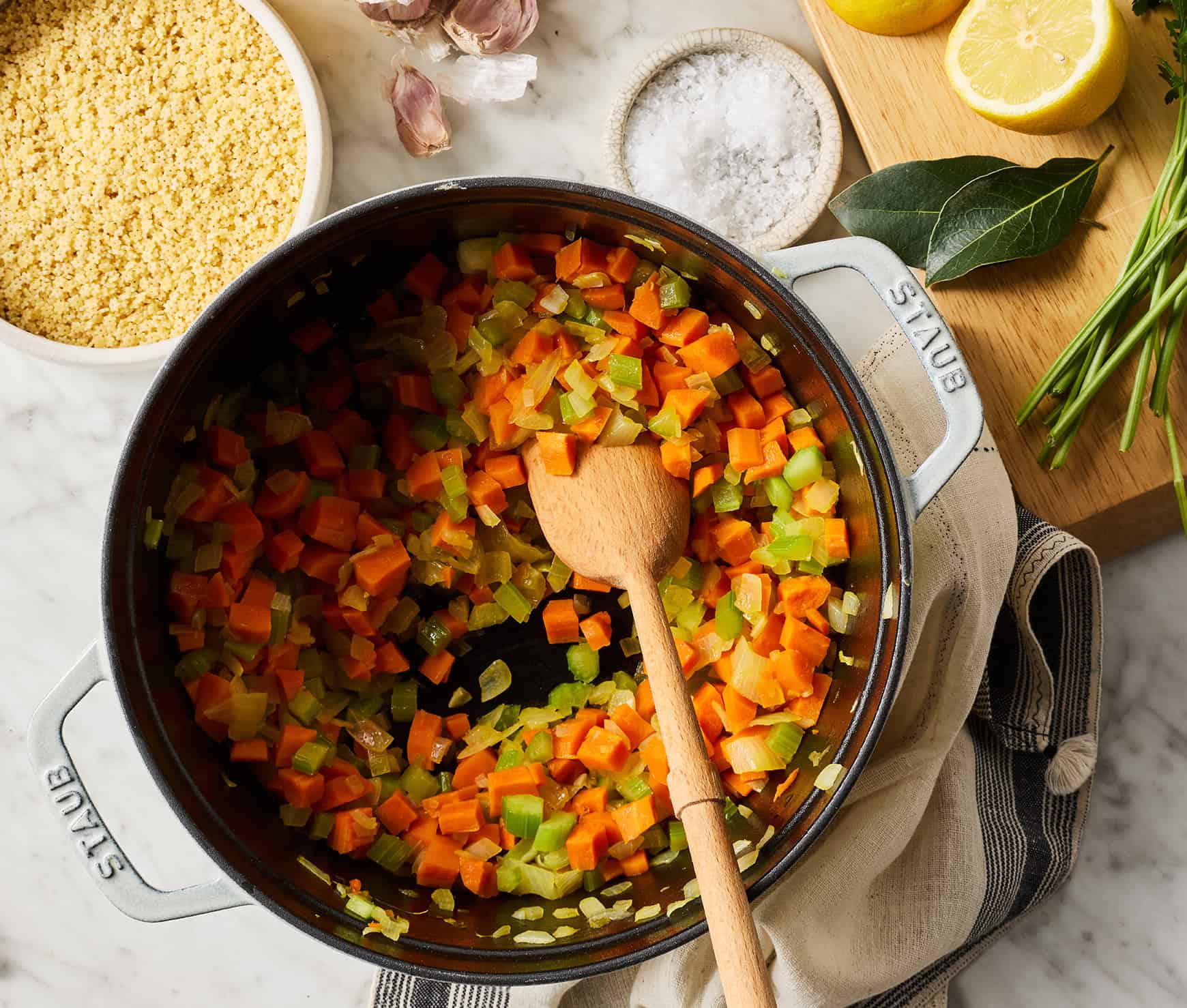
1. Sauté the onions, carrots, and celery until they soften, 8 to 10 minutes. Stir in the garlic, then add the thyme, parsley stems, bay leaves, Parmesan rind, and broth.
2. Bring the soup to a boil, then simmer until the vegetables are tender, 25 to 30 minutes. Remove the Parmesan rind, bay leaves, thyme, and parsley.
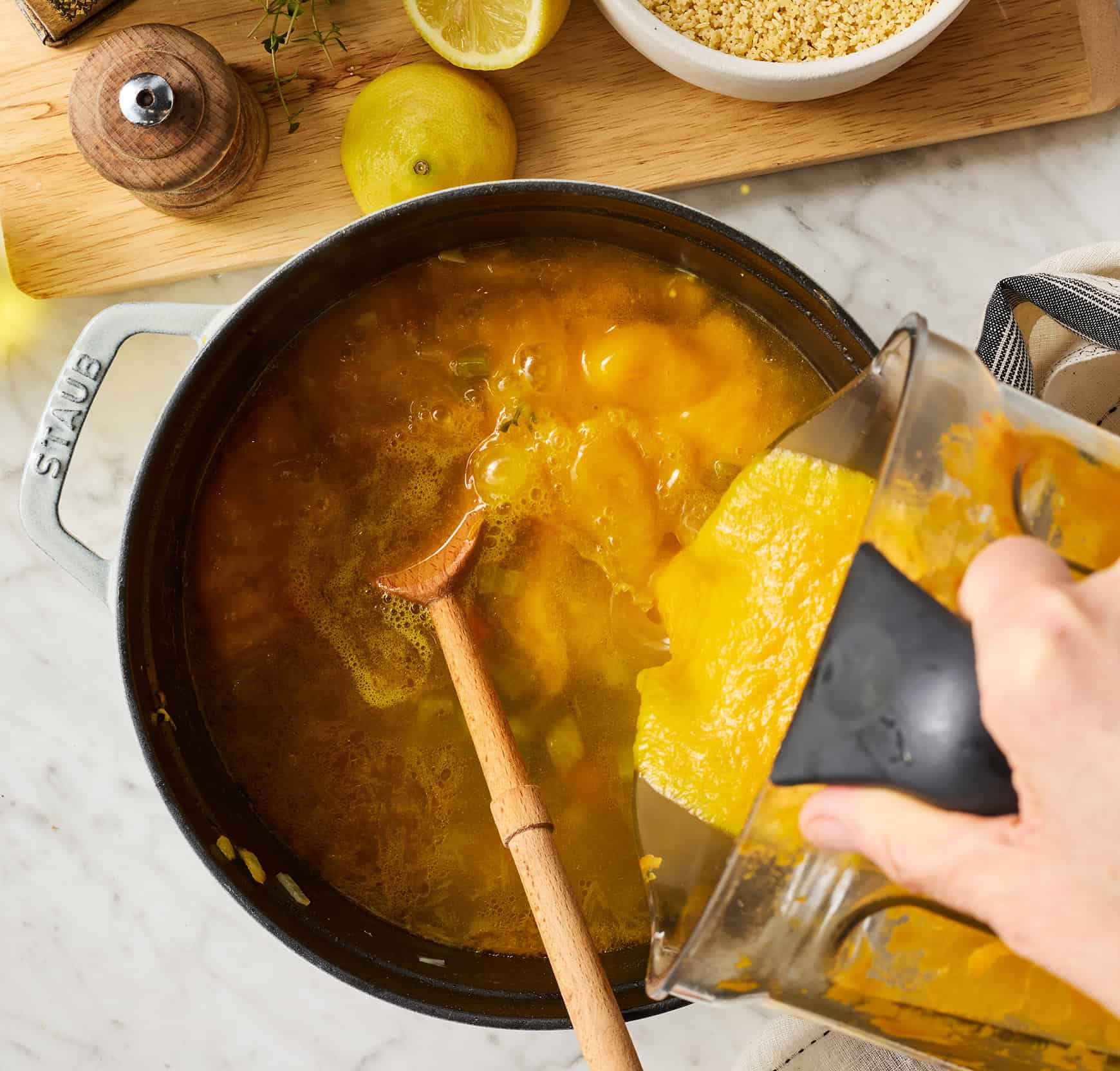
3. Blend some of the vegetables. Use a slotted spoon to scoop out two cups of the tender veggies. Transfer them to a blender with 1 cup of the broth and blend until smooth. Stir the puree back into the pot.
4. Cook the pastina in the soup. Bring the soup back to a vigorous simmer, add the pastina, and cook until al dente. Stir in the lemon juice and taste and adjust as needed.
Serve topped with fresh parsley and freshly grated Parmesan cheese.
Recipe Tips
- Simmer the vegetables until completely tender. The softer they are, the more seamlessly they’ll blend into the broth.
- You can use an immersion blender. The broth is smoother with a regular blender, but if you prefer to use an immersion blender, feel free. When the veggies are tender, scoop 1 cup of them out of the soup and set aside. Blend the rest right in the pot before stirring the reserved vegetables back in.
- The pasta cooking time will depend on what shape you’re using. Most pastina cooks in around 9 to 15 minutes at a vigorous simmer, but check your pasta’s package instructions before you add it to the soup. If it has a shorter cook time, start checking it earlier so that it doesn’t overcook.
- Cooking the pasta in the soup releases starches as it simmers, giving the soup a thick, satisfying texture. If you prefer a lighter, brothier texture, you can cook the pasta in a separate pot of boiling water, then add it to the soup when it’s al dente.
How to Store Pastina Soup
Store leftover pastina soup in an airtight container in the refrigerator for up to 3 days. The pasta absorbs the broth as it sits, so you may want to thin the soup with a little water when you reheat it. It reheats nicely on the stovetop or in the microwave.
If you want to freeze this soup, prepare it without the pasta — if you freeze it with the pasta already in it, the pasta can disintegrate. Freeze the soup base on its own for up to 3 months, then add the pasta when you reheat.
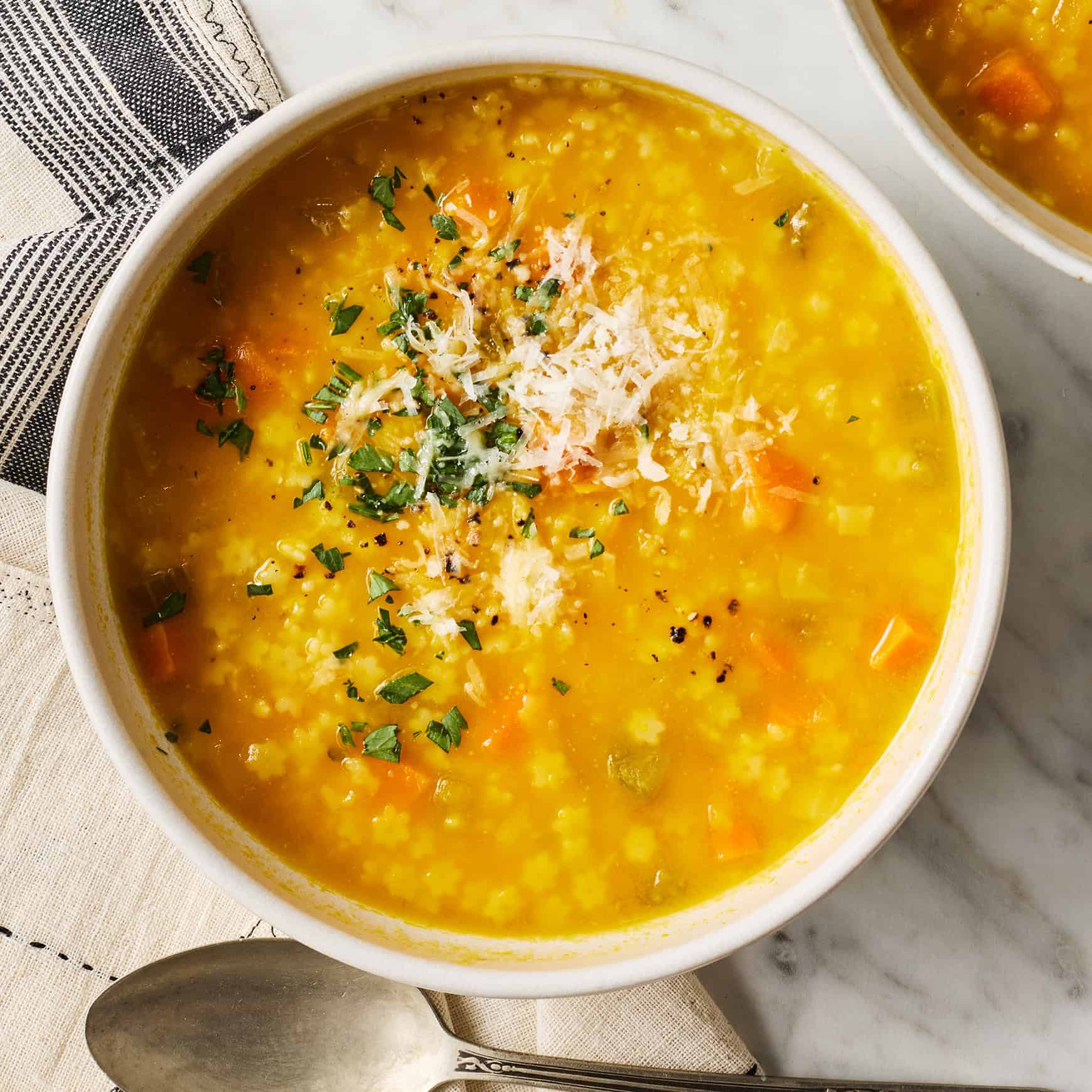
Whether you’re fighting off a cold or simply craving something warm and restorative, this pastina soup is a satisfying bowl you’ll return to all season long.